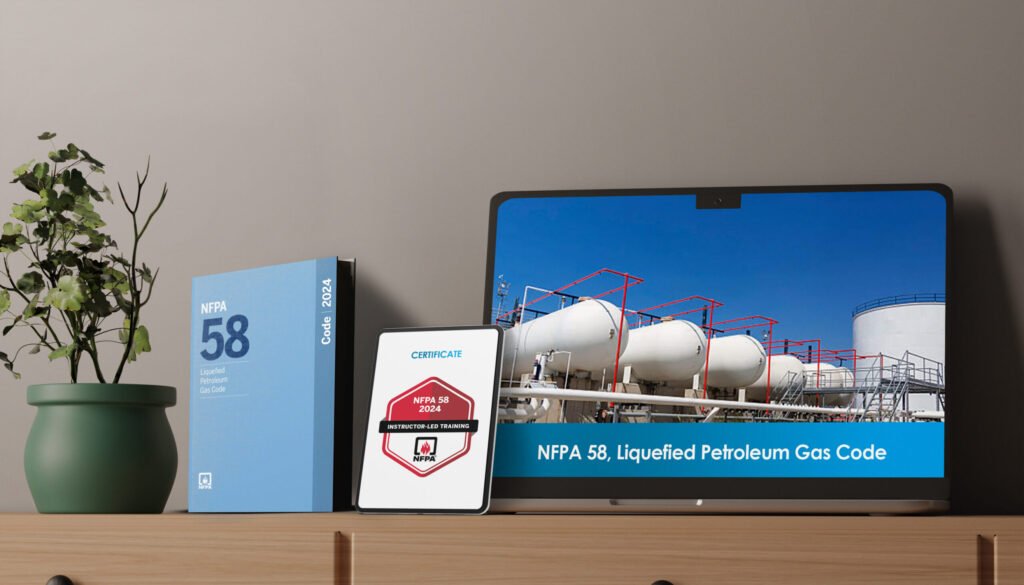

This NFPA 58 training equips participants with the knowledge to safely manage liquefied petroleum gas (LP-Gas) in diverse applications. Covering storage, handling, transportation, distribution, and specialized uses, the course ensures learners can apply NFPA 58 provisions to enhance safety and compliance across LP-Gas environments.
 During this course, participants will explore:
- Scope, purpose, and application of NFPA 58
- Equipment standards and installation requirements
- Transfer, storage, and transportation protocols
- Distribution facility compliance requirements
- Engine fuel system provisions
- Refrigerated container handling and safety
- Marine shipping and receiving standards
- Operations and maintenance best practices
- Safety for mobile food facilities using LP-Gas
 After completing this course, participants will be able to:
- Apply NFPA 58 requirements to LP-Gas systems and equipment
- Implement safe transfer, storage, and transportation procedures
- Ensure compliance with distribution and engine fuel system standards
- Manage refrigerated containers and marine shipping operations
- Apply effective operational and maintenance practices
- Understand and enforce safety standards for LP-Gas use in mobile food facilities
 This course is ideal for:
- Engineers and facility managers
- Safety officers and compliance professionals
- LP-Gas operators and maintenance personnel
- Transportation and distribution specialists
- Marine, food service, and mobile facility operators